Home

The Encyclopedia Sonnetica
Welcome to The Encyclopedia Sonnetica: A Universal Encyclopedia Composed of Sonnets, well over 4,000 sonnets—and counting. “Higher still and higher”–and wider still and wider, deeper still and deeper. Exelsior!
The wide-ranging nature of the sonnet sequence gives occasion for calling the collection an encyclopedia since each sonnet is an article or part of an article in the encyclopedia. Also, most of the time, each sonnet deals with more than one subject–so thousands upon thousands of topics.
This encyclopedia of sonnets has been in the making for nearly six decades. It is the longest sonnet sequence in the history of English and almost certainly in any language. The individual sonnets of Lope de Vega amount to somewhat over 3,000. Phillip Whidden has written his sonnets in America, China, England, Italy, Kenya, The Maldives, Nigeria, Scotland,Tanzania, and Zanzibar.
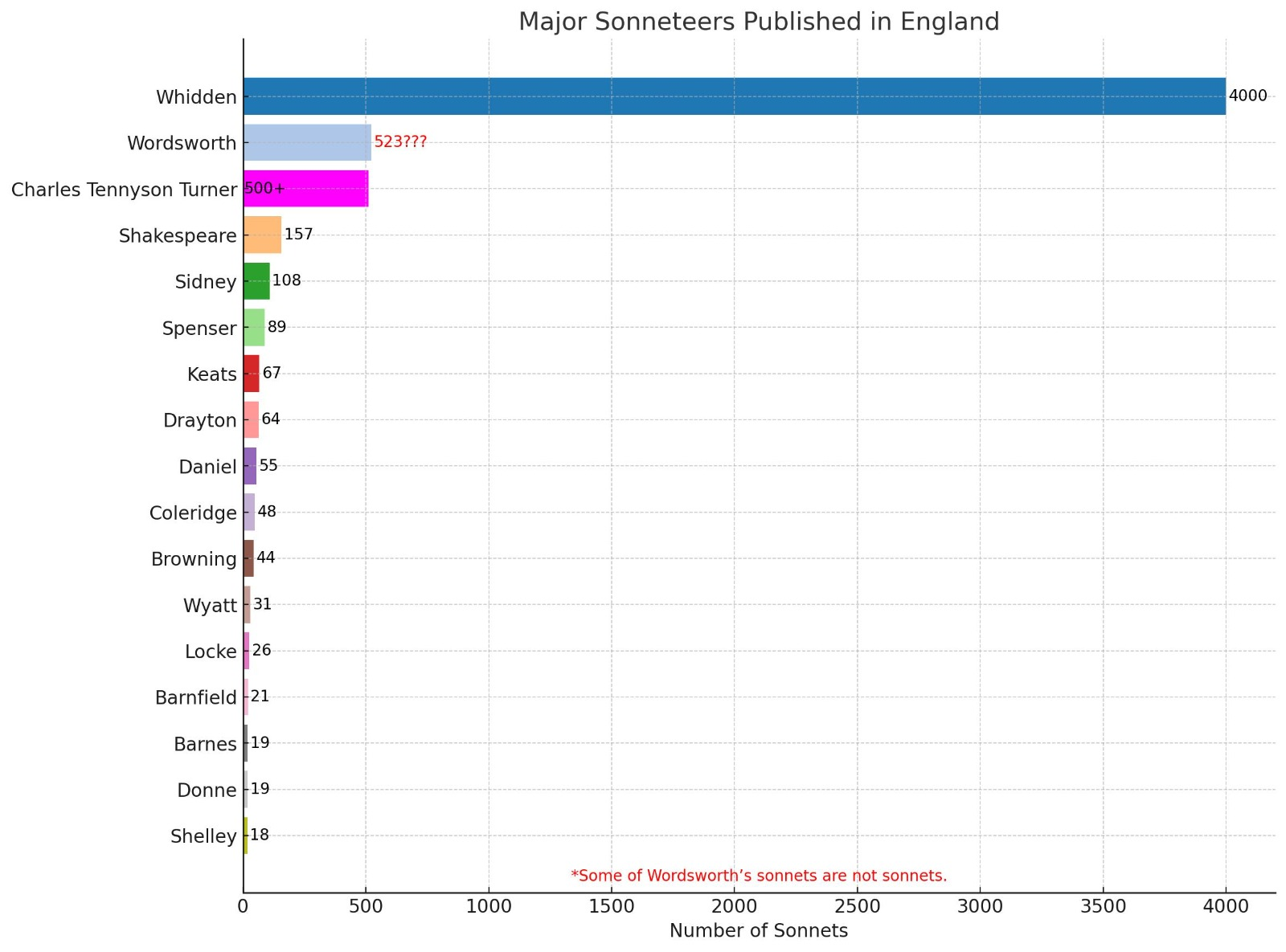
He has written more sonnets than all the famous sonneteers in England, combined.
To find a particular topic or subject, use the search symbol (the little magnifying glass). Search for sonnets under a topic (such as “romantic love” or “ancient Greece.” Or you can search for the sonnet’s title (putting it in double quote marks). Just to be clear: to search for sonnets among the website’s articles, search for the topic, such as a word or a phrase, put the phrase in double quote marks. To search for a sonnet using one of its lines, key in the line (in double quote marks). To search for the sonnet by part of a line, key in that part (in double quote marks).

Whidden has also written other types of poetry including free verse, haiku, limericks, and villanelles. An important “crossover” poem, published in both Britain and America, is his “Ode to an American Marine.” It is a cross between free verse and rhymed and rhythmical verse. Whidden has also had essays about poetry published in Britain and America, including one about Wilfred Owen’s “Dulce et decorum est” in The New Edinburgh Review, one about Norman MacCaig’s “Summer Farm” in the website of the Society of Classical Poets (New York), and one about the poetry of Walter Nash in The Glass, number 12, Winter 1999, pp. 46-49.