
Childish Idea
Modern poetry modern verse contemporary poetry contemporary verse modern poem contemporary poem
2 Timothy 3:16
“Lawrence speaks of those ‘directing all their subtle evil will against any positive living thing,
masquerading as the ideal in order to poison the real.’”
~ R. H. Blyth
Free verse was fobbed off on us as ideal
Supposedly because the ancients thought
That poets were inspired and so a peal
Of poetry rang out with lines unsought,
Miraculous and pure. It follows that
A poet who takes care of rhythm, rhyme
And wise control will make a poem splat
With loss of inspiration. Such a crime
Was foisted over centuries and the folk
Were dumb enough they didn’t know this verse
Was less than Poetry. They just weren’t woke
Enough. And now they’re given something worse.
Free verse just burbles out and so it must
Be holy, inspiration we can trust.
~ Phillip Whidden
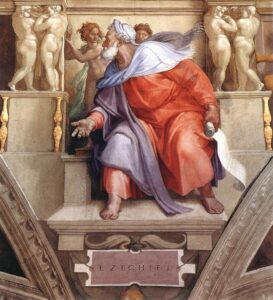 Ezekiel
? But you’ve talked about how you don’t suffer from writer’s block, but write easily (and prolifically!) in part because the rhymes help you to limit the possibilities of where your poem is going next, all those choices about what to say. Yes? So, then, for you (perhaps), would writing in free verse actually be harder? What you do is actually MORE, then, like Pollock splashing out paint with rapid inspiration on a page? We read each sonnet as the relatively unfiltered “inspiration” of a moment (or, well, an hour, perhaps??)
Do you think free verse poets splash out their lyrics (and revise! and re-revise them!) faster than you do?
(I’m just . . . pushing back, of course. I like rhyming and/or metered poetry, as well as free verse. I think either one can be thoughtful.)
You took a risk by writing to me here on this website, Tom. As you know, I seldom look for messages here. I don’t know how most free verse writers go about writing their free verse. Back when I wrote it, I almost always controlled it, even severely controlled it. The free verse production called “Indiana” (or whatever) was, as you noticed, extremely controlled. You will have seen it in SPECTRUM. A very early free verse piece of writing by me published in SPECTRUM (“The Afternoon Half Moon”) was easy to write because it was in essence an anecdote, so I just wrote it chronogically. No challenge. However, that raises the obvious objection that if I was writing chronologically, then it wasn’t free. For me the writing of a strictly controlling form (such as a sonnet) helps me get from the opening to what follows because I don’t have a clue where the poem will go or what path it will take. I let IT pull me along. So, it’s no challenge and I’m not free. The form is in control. Since I don’t care about delivering an imagined message or meaning, then I’m free partially because the poem is not free. Yes, I see the paradox. Thanks for hanging with me, Tom.